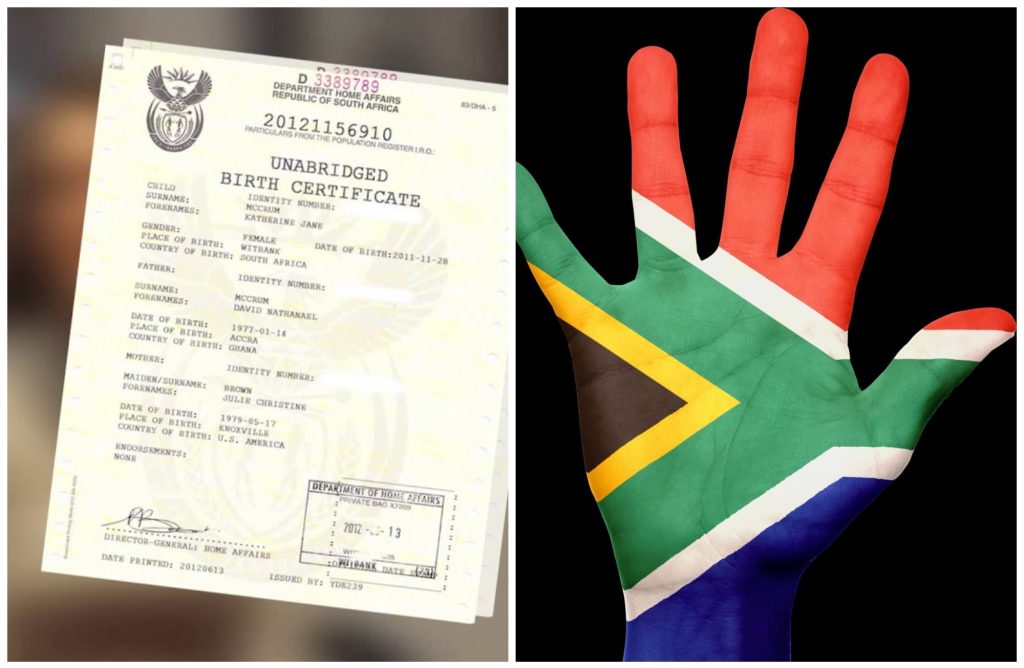
A birth certificate is undeniably one of the most important legal documents you can have. It’s not just a piece of paper; it’s your official proof of identity, citizenship, and family ties. Whether you’re applying for a passport, enrolling in school, or navigating legal and immigration processes, this document is key.
But did you know that in South Africa, there are actually two types of birth certificates? Many people are unaware that there are two distinct formats of this document: the abridged and the unabridged birth certificate. While both are legally valid, they differ in the level of detail they provide and in the circumstances under which they are accepted.
Understanding these differences is crucial. An abridged birth certificate may suffice for routine matters such as school enrolment or insurance purposes, but an unabridged birth certificate is usually required for applications involving passports, citizenship, adoption or immigration..
Let’s take a closer look at these two formats and see why each plays a unique role in confirming who you are.
Two Types of Birth Certificates in South Africa
The Abridged Birth Certificate
An abridged birth certificate is essentially a simplified version of the full birth record. It captures only the basics: the person’s name, date and place of birth, and sex. Because it doesn’t include all details from the original registration, it’s quicker and easier to issue. Think of it as a handy snapshot of your identity — concise, official, and widely accepted within South Africa. For many everyday situations like proving identity for school or accessing certain services, this certificate has traditionally been enough.
However, since March 4, 2013, South Africa’s Department of Home Affairs has been phasing out abridged birth certificates. Now, only unabridged birth certificates—complete with detailed parental information—are issued for new registrations. This shift ensures more comprehensive records and is especially important for national processes like passport applications and immigration, where only the unabridged certificate is accepted.
So, while abridged birth certificates remain legally valid for some uses, they no longer serve as the standard for official and international documentation. Knowing this helps you navigate which document you need depending on your purpose.
The Unabridged Birth Certificate
The unabridged birth certificate, on the other hand, is a more detailed document. It contains all the information found on the abridged certificate but also includes additional details about the parents, such as their full names, identity numbers, and citizenship status. This makes it a stronger proof of identity and parentage.
Because of its thoroughness, the unabridged birth certificate is essential for passport applications, citizenship processes, immigration, adoptions, and registering births abroad. If your child was born in South Africa after 14 March 2013, they automatically received this certificate free of charge. For those born before this date, or in countries that don’t issue unabridged certificates automatically, it’s crucial to apply for one well ahead of any travel plans.
Why Does This Matter?
The distinction between these two types of birth certificates isn’t just bureaucratic nitpicking. It has real implications for anyone navigating official processes. Here’s why:
- Local Versus International Use: The abridged certificate typically suffices for local administrative needs, while the unabridged certificate is required for international travel, immigration, or legal matters.
- Verification of Parentage: The unabridged certificate’s inclusion of detailed parental information helps verify family relationships, which is essential for visas, residency applications, and some adoption cases.
- Legal Requirements: Certain government departments and foreign embassies explicitly request the unabridged certificate to avoid any confusion or fraud.
In short, knowing which certificate to use and when can prevent delays, extra costs, and frustration.
How to Obtain Each Type?
If you don’t have either certificate, obtaining them is straightforward. You can apply through the Department of Home Affairs in South Africa. Many people only have the abridged certificate received previously and still need to apply for the unabridged version.
Keep in mind that the unabridged certificate may take longer to process due to the additional verification involved. It’s a good idea to apply well in advance if you know you’ll need it for travel or legal purposes.
Final Thoughts
When it comes to obtaining an unabridged birth certificate in South Africa, the process can feel overwhelming. That’s where Global Apostille steps in to help. With their efficient service, you can receive your official document within just 10 working days, saving you time and hassle.
Whether for legal, travel, or personal reasons, securing an unabridged birth certificate is crucial, and Global Apostille ensures the process is smooth and straightforward. Their expertise means no unnecessary delays or complications, giving you peace of mind.
For more information, please contact us at:
Tel: 012 348 3134; Mobile: 081 347 6060; Email: info@apostillelegalisation.co.za