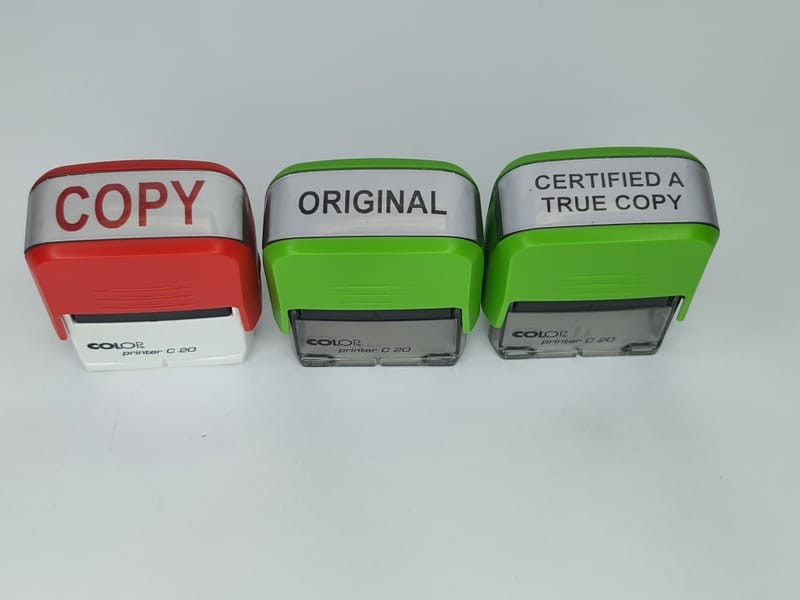
Whether you’re applying to a foreign university, buying property overseas, or submitting documents to a foreign embassy for a visa application, you’ve probably been asked to provide an original document, such as a birth certificate or police clearance. However, sometimes presenting the original document is not possible for objective reasons, and submitting certified true copies can expedite the process. At first glance, “certified true copy” and “original copy” might seem interchangeable, but legally, they are very different.
Here at Global Apostille, we help clients in Johannesburg, Pretoria, Cape Town and Durban with their document requirements every day. We process thousands of documents each year, ranging from powers of attorney to birth certificates and everything in between. One question we are almost always asked is, ‘Will my original document be legalised, or can you process a certified copy?’ No matter what you are applying for — whether to a school, the immigration authorities or a government agency — it’s important to understand what type of document or certification you need and how to obtain it correctly the first time.
This article explains the difference between certified true copies and original documents in the context of apostilles, and details how and when to use each one.
What is an Original Document?
An Original Document is the first or primary version of a document issued by the relevant authority. It is the most authentic and valid form of the document.
Key Characteristics of an Original Document:
- Issued by the Authority: The document is produced and authenticated by the issuing body (e.g., a Department of Home Affairs, academic institution, or SAPS, RTMC).
- Legal Recognition: The original holds the highest legal weight and is usually irreplaceable.
- Unique Features: It often includes security features such as watermarks, seals, stamps, or signatures that distinguish it from a copy.
Examples of Original Documents:
- Birth certificates
- Property deeds
- University diplomas
- Contracts signed by all parties
What is a Certified True Copy?
A certified true copy is a copy of an original document that has been reviewed and verified by an authorised person, such as a notary public or police officer, as being an exact and complete reproduction of the original. The certifier compares the copy with the original to ensure that nothing is missing or has been altered. Once confirmed, they stamp or sign the copy with a statement such as ‘Certified True Copy of the Original Document’, along with the date and their official seal or signature.
Key Characteristics of a Certified True Copy:
Certified copies have several features that distinguish them from standard photocopies. A Certified True Copy typically includes:
- Official Stamp: A clear, official stamp or seal from the certifying professional
- Signature: The certifier’s signature verifying the document’s accuracy
- Date of Certification: The specific date when the copy was verified
Examples of Certified True Copies:

- Certified copies of passports for visa applications
- Certified academic transcripts for job applications
- Certified copies of company documents for official filings
Apostille: True Copy vs. Original
Whether an apostille is placed on an original document or a certified true copy in South Africa depends on the type of document and the specific requirements of the issuing authority. Below are some general guidelines:
- Original Documents: DIRCO apostilles are typically affixed to original documents. These include birth, death and marriage certificates; police clearance certificates; and SAQA letters for degrees. Before issuing the Apostille, DIRCO officials will verify the authenticity of the original document’s signature, seal or stamp.
- Notarised/Certified Copies: A High Court apostille can be affixed to a notary-certified copy of a document. This is common for documents where it is impractical or inappropriate to submit the original, such as passports, company documents or notarised legal documents. A notary public will make a photocopy of the original document and certify that it is a true and accurate representation of the original. The apostille is then placed on the certified copy by the high court.
- Educational Documents: The process for academic documents such as diplomas or transcripts can vary. Some authorities require the original SAQA letter to be apostilled, while others accept a High Court apostille attached to a certified true copy of the relevant qualification.
- Legal Documents: Legal documents, such as powers of attorney, affidavits, and statutory declarations, typically require a High Court Apostille on the original document signed in the presence of a notary.
- Country-Specific Requirements: Whether an original or a copy is required can also depend on the destination country’s regulations. Some countries may require an apostille on the original document only, while others may accept an apostille on a certified copy.
- Consulting with Authorities: It is always advisable to check with the relevant authority or entity in the destination country that will receive the document. They can advise you on whether an original or a copy is required.
In summary, whether an apostille is placed on an original document or a certified true copy depends on the nature of the document itself, the issuing authority’s requirements, and the legal requirements of the country in which the document will be used.
Still Not Sure? Let’s Figure It Out Together.
Global Apostille offers fast apostille services for original documents or certified true copies for many countries. Order online in minutes or contact us for personalised advice.
Tel: 012 348 3134;
Mobile: 081 347 6060;
Email: info@apostillelegalisation.co.za