Many people will get some form of inheritance at some point in their lives, but this gets complicated when you the estate is in a foreign country
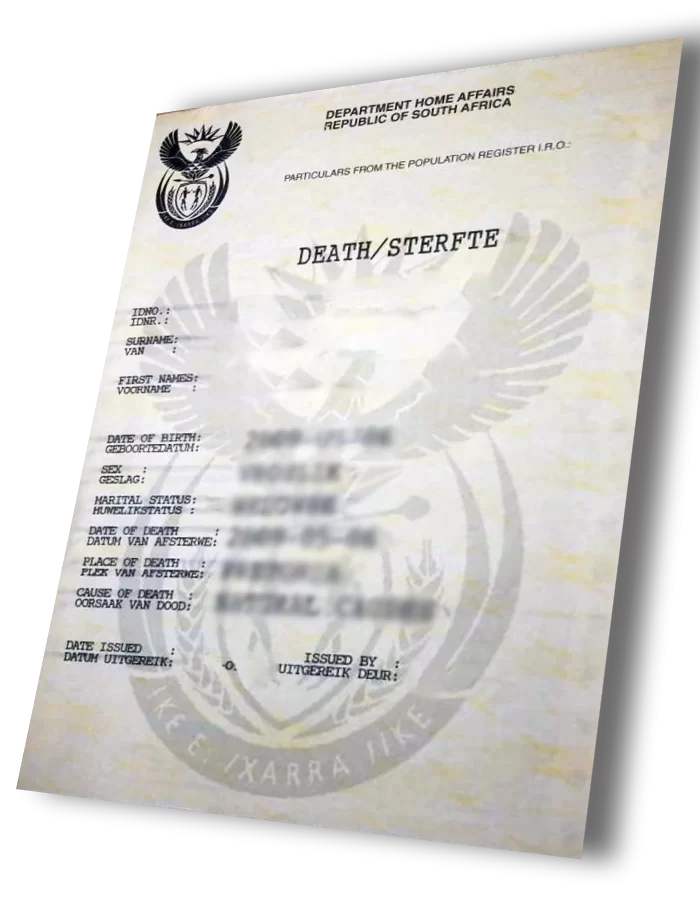
In South Africa, Death Certificates are issued under The South African Births and Deaths Registration Act 51 of 1992, It is a document issued by the Government to the nearest relatives of the deceased, stating the date, fact and cause of death. It is essential to register death to prove the time and date of death, to establish the fact of death for relieving the individual from social, legal and official obligations. They are also used by the government to track vital statistics on the population.
There are several reasons why you may need to obtain a death certificate. Most often, Death certificates serve as proof of an official death for legal purposes and are used to close the Estate of the deceased. Death Certificates may need an apostille when an overseas authority has requested a copy of the document. Indeed, following the death of your loved one, you may find overseas organisations including government bodies, courts and solicitors request a copy of the death certificate. This may be to register the death, make a claim on a pension, to resolve the deceased’s estate or to sell a property. Without an apostille the death certificate may not be accepted. In addition you may need to get a copy of the will or the letter of executorship documents translated and legalised by apostille.