If you’ve ever found yourself needing to certify a document or witness a signature in South Africa, you’ve probably encountered two official-sounding roles: Notary Public and Commissioner for Oaths. It’s easy to get these mixed up: after all, both involve legal authority and stamping paperwork. But choosing the wrong professional for your needs can have real consequences—especially if your documents are bound for foreign shores or carry significant legal weight.
Let’s clear up the confusion, explore the differences, and help you decide which one you actually need.
What Is a Notary Public?
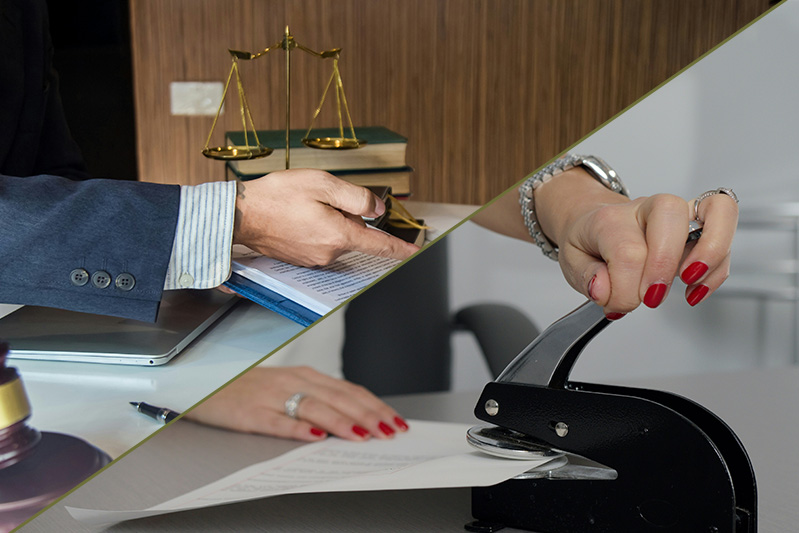
In South Africa, a Notary Public is a specially qualified legal practitioner, admitted by the High Court, who holds unique statutory authority. A notary’s work goes far beyond simple witnessing: they authenticate, execute, and preserve legal documents that enjoy international recognition. Under the doctrine of fides publica, anything signed and sealed by a notary is presumed authentic by courts and registries worldwide.
Notaries are typically required when:
- Authenticating documents for use outside South Africa
- Buying or selling property abroad
- Setting up a business in another country
- Preparing a Power of Attorney for overseas use
- Submitting paperwork to foreign courts or embassies
Notaries can also certify copies, administer oaths, and draft specialised legal instruments. Their signature and seal carry international weight, which is the key distinction here.
What Is a Commissioner for Oaths?
A Commissioner for Oaths, on the other hand, is an official authorised to witness signatures, administer oaths or affirmations, and certify copies of documents as true copies of the original. This role is primarily for domestic legal matters within South Africa—think court affidavits, sworn statements, or confirming the truth of a declaration for local use.
The Commissioner will verify your identity, witness your signature, and ensure you understand what you’re signing. Crucially, though, their authority does not extend internationally: documents sworn before a commissioner are not automatically recognised outside South Africa.
The Key Differences at a Glance
- Scope: Notarial work is internationally recognised; Commissioner for Oaths work is limited to South African territory.
- Complexity: Notaries handle more complex, often cross-border matters. Commissioners mostly witness straightforward statements and affidavits.
- Cost: Commissioners for Oaths may not charge a fee for witnessing or certifying local documents, while notarial services generally involve a fee—reflecting their greater responsibility and the international implications of their role.
- Powers: All notaries are commissioners, but not all commissioners are notaries. Notarial powers are broader and more authoritative.
When Should You Use Each One?
You’ll need a Notary Public if you are:
- Buying or selling property abroad
- Setting up or transferring a business offshore
- Submitting documents to a foreign embassy or consulate
- Dealing with an international estate
- Preparing a Power of Attorney for overseas use
- Getting documents legalised with an apostille
A Commissioner for Oaths is best for:
- Swearing affidavits for South African court proceedings
- Signing domestic declarations or statements
- Confirming a statement under oath for local applications
- Certifying true copies of documents for local use
If you’re at all unsure which applies, a notary can always clarify—after all, they have the authority of a commissioner as well, so you’re covered either way.
Certified True Copies and Global Apostille
When your documents need to cross borders, it pays to get expert help. Global Apostille specialises in apostille legalisation and certified true copy services, tailored for individuals and businesses navigating cross border transactions. We also offer certified translation services for English, French, German, Portuguese, and Spanish, ensuring your paperwork is ready for international use. With partners in Johannesburg, Pretoria, and Cape Town, We’re well placed to help you get it right the first time.
Contact us for more information:
Tel: 012 348 3134 | Mobile: 081 347 6060 | Email: info@apostillelegalisation.co.za