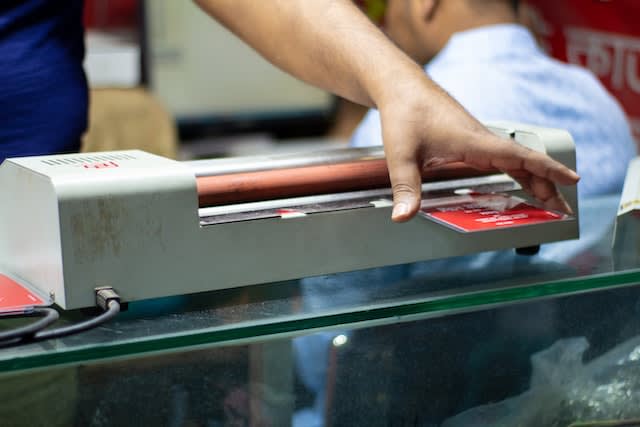
Important documents such as birth certificates and educational qualifications play a vital role in your life. They are required for higher education, jobs abroad, immigration applications, property transfers and embassy verifications. Many South Africans laminate these certificates for protection; however, such ‘care’ can create unexpected obstacles when applying for a Hague apostille certificate at the Department of International Relations and Cooperation (DIRCO).
We often have clients who ask us whether it is possible to obtain a Dirco Hague apostille for laminated certificates. The short answer is no. Laminated documents cannot be attested due to concerns about tampering and the inability to verify their authenticity. If your document is laminated, you will either need to remove the lamination or obtain a fresh copy from the issuing authority.
Global Apostille offers clients in Pretoria, Johannesburg, Cape Town and Durban a fast and reliable urgent DIRCO Hague apostille service, ensuring your South African documents are processed efficiently and correctly for international use.
Is it allowed to laminate official certificates?
Although South African law does not prohibit the lamination of documents, government departments are within their rights to refuse to accept them in this form. The South African Department of Home Affairs does not officially recommend laminating official documents, including birth and marriage certificates, which may be required for travel abroad. The reasons for this are purely technical:
- Tampering concerns: Lamination can make it difficult to verify the authenticity of a document. The legalisation section at DIRCO needs to ensure that the document has not been altered or forged; lamination can obscure important details and raise suspicions of tampering.
- Inability to verify signatures and seals: The legalisation section at DIRCO often needs to physically examine the paper, ink and seals on the document. Lamination can make this process impossible.
- Legal requirements: Most government and legal bodies, including DIRCO and embassies, require documents to be in their original, unaltered state for attestation. Lamination is considered an alteration.
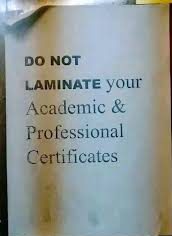
What to do if the certificate is already laminated?
Laminating official certificates can cause irreparable damage and potentially invalidate them. The plastic coating can cause the ink to smudge or run. This will make it difficult or even impossible to read the certificate. Furthermore, the laminate can cause your document to warp or curl. This makes storing and displaying it more difficult. If your document is already laminated, you will need to take the following steps to obtain the DIRCO Hague Apostille:
- Remove the Lamination: Carefully remove the lamination to restore the document to its original state. Be cautious not to damage the document during this process.
- Obtain a Fresh Copy: If removing the lamination is not feasible or risks damaging the document, you can apply for a duplicate or fresh copy from the issuing authority. For example:
- Educational certificates can be reissued by the respective board or university.
- Birth and marriage certificates can be obtained from any branch of the Department of Home Affairs.
- Ensure the Document is in Pristine Condition: Before submitting the document for DIRCO Hague Apostille, ensure it is free from tears, stains, or any other damage.
- If time is of the essence, consider obtaining a Hague Apostille from the High Court on a notarised copy of your certificates.
As an agency, we always advise clients to keep their important documents in their original, unaltered state to avoid complications during the attestation process.
FAQs on South African Laminated certificates
- 1. Can I use a laminated birth certificate for a DIRCO Hague apostile?
- No. Government agencies usually reject laminated certificates because they cannot check the original paper, seals, and watermarks for authenticity. You must submit an unlaminated original.
- 2. Do embassies accept laminated South African Certificates?
- Most embassies do not. Laminated documents are often returned without processing because they are essential for attestation/apostile stamping, a step that cannot be completed on plastic.
- 3. Can I remove lamination from my certificates at home?
- It’s not recommended. Using heat, blades, or chemicals can easily damage the print or official seals.
- 4. What happens if I submit laminated documents to DIRCO?
- Your document may be significantly delayed or rejected. You will likely be asked to submit a duplicate unlaminated certificate, which can take weeks or months.
Contact us today for apostile solutions!
Tel: 012 348 3134;
Mobile: 081 347 6060;
Email: info@apostillelegalisation.co.za